MY FOLLOWERS

Showing posts with label ALL TOP 10 LISTS. Show all posts

Wednesday, April 13, 2011

10 Most Poisonous Animals in the World

 Box Jellyfish. It has caused at least 5,567 recorded deaths since 1954. Their venom is among the most deadly in the world. Its toxins attack the heart, nervous system, and skin cells. And the worst part of it is that jelly box venom is so overpoweringly painful, that human victims go in shock, drown or die of heart failure before even reaching shore. Survivors experience pain weeks after the contact with box jellies.
 

You have virtually no chance to survive the venomous sting, unless treated immediately. After a sting, vinegar should be applied for a minimum of 30 seconds. Vinegar has acetic acid, which disables the box jellys nematocysts that have not yet discharged into the bloodstream (though it will not alleviate the pain). Wearing panty hose while swimming is also a good prevention measure since it can prevent jellies from being able to harm your legs.


Jelly box can be found in the waters around Asia and Australia.


2. King Cobra

The King Cobra (Ophiophagus hannah) is the worlds longest venomous snake - growing up to 5.6 m (18.5 ft) in length. Ophiophagus, literally means snake-eater as it eats other snakes. One single bite of this deadly snake can easily kill a human. This snake is even capable of killing a full-grown Asian Elephant within 3 hours if the larger animal is bitten in a vulnerable area such as the trunk.

Its venom is not as toxic as other venomous snakes, but King Cobra is capable of injecting 5 times more venom than black mamba and can result in mortality up to 5 times faster than that of the black mamba. It is quite widespread, ranging across South and South-east Asia, living in dense highland forests.


3. Marbled Cone Snail

This little beautiful looking Marbled Cone snail can be as deadly as any other animal on this list. One drop of its venom is so powerful that it can kill more than 20 humans. If you ever happen to be in warm salt water environment (where these snails are often found) and see it, dont even think of picking it up. Of course, the true purpose of its venom is to catch its prey.

Symptoms of a cone snail sting can start immediately or can be delayed in onset for days. It results in intense pain, swelling, numbness and tingling. Severe cases involve muscle paralysis, vision changes and breathing failure. There is no antivenom. However, only about 30 human deaths have been recorded from cone snail envenomation.


4. Blue-Ringed Octopus

The Blue-Ringed Octopus is very small, only the size of a golf ball, but its venom is so powerful that can kill a human. Actually it carries enough poison to kill 26 adult humans within minutes, and there is no antidote. They are currently recognized as one of the worlds most venomous animals.

Its painless bite may seem harmless, but the deadly neurotoxins begin working immediately resulting in muscular weakness, numbness, followed by a cessation and breathing and ultimately death.


They can be found in tide pools in the Pacific Ocean, from Japan to Australia.


5. Death Stalker Scorpion

Contrarily to the popular belief most of the scorpions are relatively harmless to humans as stings produce only local effects (pain, numbness or swelling). However, the Death Starker Scorpion is highly dangerous species because its venom is a powerful cocktail of neurotoxins which causes an intense and unbearable pain, then fever, followed by coma, convulsions, paralysis and death. Fortunately, while a sting from this scorpion is extremely painful, it would be unlikely to kill a healthy, adult human. Young children, the old, or infirm (with a heart condition) are at the biggest risk.


Death stalker scorpions are spread in North Africa and Middle East.


6. Stonefish

Maybe Stonefish would never win a beauty contest, but it would definitely win the top prize for being The World Most Venomous Fish. Its venom causes such a severe pain that the victims of its sting want the affected limb to be amputated. It is described as the worst pain known to man. It is accompanied with possible shock, paralysis, and tissue death. If not given medical attention within a couple of hours It can be fatal to humans.


Stonefish stores its toxins in gruesome-looking spines that are designed to hurt would-be predators.


Stonefish mostly live above the tropic of Capricorn, often found in the shallow tropical marine waters of the Pacific and Indian oceans, ranging from the Red Sea to the Queensland Great Barrier Reef.


7. The Brazilian wandering spider

The Brazilian Wandering Spider (Phoneutria) or banana spider appears in the Guinness Book of World Records 2007 for the most venomous spider and is the spider responsible for most human deaths.


This spider is believed to have the most potent neurotoxic venom of any living spider. Only 0.006mg (0.00000021oz) is sufficient to kill a mouse. They are also so dangerous because of their wandering nature. They often hide during daytime in highly populated areas inside houses, clothes, boots, and cars.


Its venomous bite causes not only intense pain, the venom of the spider can also cause priapism - uncomfortable erections lasting for many hours that lead to impotence.


8. Inland Taipan

The prize for The Worlds Most Venomous Snake goes to the Inland Taipan of Australia. Just a single bite from this snake contains enough venom to kill 100 human adults or an army of 250,000 mice. Its venom is at least 200 - 400 times more toxic than a common cobra. The Inland Taiwans extremely neurotoxic venom can kill an adult human in as little as 45 minutes. Fortunately this snake is very shy and there have been no documented human fatalities (all known bites were treated with antivenin).


9. Poison Dart Frog

If you ever happen to be running through the rain forests somewhere in Central or South America, do not ever pick up beautiful and colorful frogs - it can be the Poison Dart Frog. This frog is probably the most poisonous animal on earth.The 2 inch long (5cm) golden poison dart frog has enough venom to kill 10 adult humans or 20,000 mice. Only 2 micrograms of this lethal toxin (the amount that fits on the head of a pin) is capable of killing a human or other large mammal. They are called dart frogs because indigenous Amerindians use of their toxic secretions to poison the tips of their blow-darts.. Poison dart frogs keep their poison in their skins and will sicken or kill anybody who touches or eats it.


10. Puffer Fish

Puffer Fish are the second most poisonous vertebrate on earth (the first one is golden dart Frog). The meat of some species is a delicacy in both Japan (as fugu) and Korea (as bok-uh) but the problem is that the skin and certain organs of many puffer fish are very poisonous to humans.


This puffy fish produce rapid and violent death..Puffers poisoning causes deadening of the tongue and lips, dizziness, vomiting, rapid heart rate, difficulty breathing, and muscle paralysis. Victims die from suffocation as diaphragm muscles are paralyzed. Most of the victims die after four to 24 hours. There is no known antidote, Most deaths from fugu happen when untrained people catch and prepare the fish.


Statistics show that there were 20 to 44 incidents of fugu poisoning per year between 1996 and 2006 in all of Japan and up to six incidents per year led to death. Since Fugus poison can cause near instantaneous death, only licensed chefs are allowed to prepare it.

Monday, April 11, 2011

Top 10 Unusual Death Rituals

As if death was not morbid enough, many people have taken last rites to a whole new level of dreadfulness. In some cultures disposing of the corpse might mean anything from eating it up to dancing with it. Those of you who think burial and cremation are the only death rituals; please prepare yourself before you read what follows below:

10. Funeral With Strippers


Being dead can be such a bore, unless there are professional strippers in the funeral. In China’s Donghai region, funerals are actually status symbols. A dead man’s reputation and honor is considered to be directly proportional to the number of people who attend his funeral. So, the relatives hire strippers to pull the crowds. The Chinese authorities have started cracking down on the practice after incessant media glare.

9. Dancing With The Dead


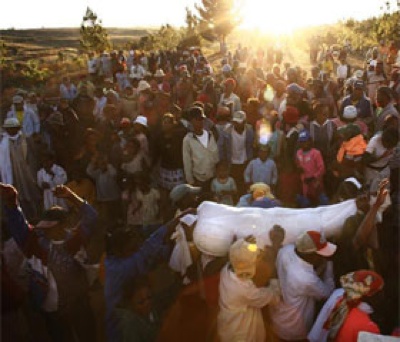
Believe it or not, the Malagasy of Madagascar take out the dead from the graves and jive with them. The belief behind this ritual called Famadihana is that the spirit of the deceased joins the ancestors after the body has decomposed. The celebration is often held once every seven years and is a time of joyous family reunions.

8. Sky Burial


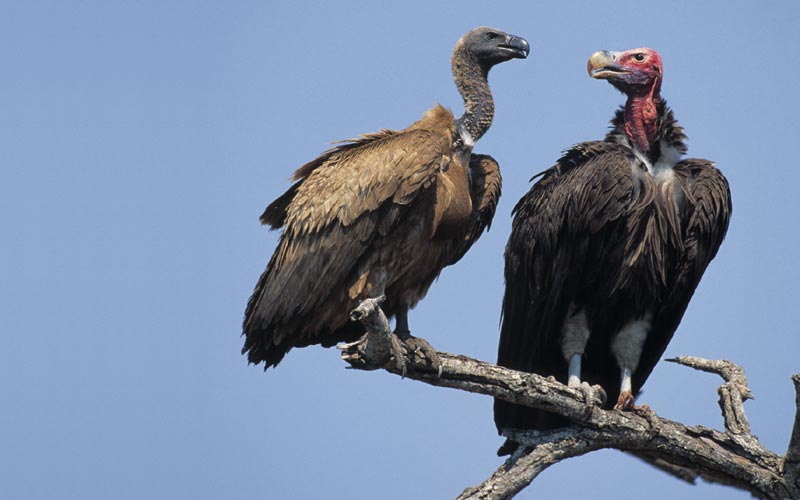
Tibet’s harsh climate and stony ground makes burial a near-impossible task. So, Buddhists in Tibet often go for a sky burial where the body is chopped, mixed with flour and left to be eaten up by scavenging bird. They believe that the body is just a vessel for the soul and should go back to nature.

7. Tana Toraja Funeral


Funerals in the Tana Toraja region of Indonesia are big affairs. The burial ceremony is accompanied by music, dance and a feast for a number of guests. Understandably, death here is an extravagant occasion with a huge price tag.  So, the relatives of the deceased are given a reprieve. They need not bury the body within a couple of days. They can just wrap it up and keep it in their home while they save for the wake. The saving can take weeks, months or even years. Until then, the corpse is treated as a sick man and included in the daily routines and conversations. An actual burial takes place when the family is prepared for it and the coffin is placed in a grave, cave or hung on a cliff.

6. Dazzling Death


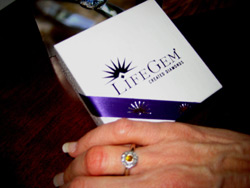
People can now wear their loved ones on their fingers. Where else can you wear a diamond ring? An American company called LifeGem now offers people a chance to turn their dead loved ones into synthetic diamonds. The process starts by capturing carbon from the body or cremated remains of the deceased. It is then turned into graphite before putting it into a diamond press to obtain the shiny crystal. The price ranges from $3500 to $20,000 depending on the carat size.

5. Fantasy Coffins


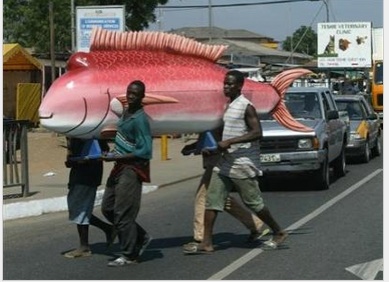
If Elvis died in Teshi (Ghana), he would have been buried in a guitar coffin. Residents of this Accran suburb bury their dead in fantasy coffins. The casket often represents the profession of the deceased. Giant replicas of coke bottles, fruits or gadgets are displayed in coffin showrooms.

4. Endocannibalism


This might be the worst death ritual ever. Endocannibalism is a practice where people eat their own dead. The idea behind the horrid custom could be anything; from imbibing the deceased’s traits to assimilation of the spirit. A few tribes in South America and Australia are said to have practiced this creepy ritual. But many academics feel that endocannibalism is a false accusation thrown at tribes by early colonists to gain an excuse for political domination. According to anthropologist Napolean Changon, the Yanomamo community in South America still eats the ash and ground bones of the deceased after cremation.

3. Self-Mummification


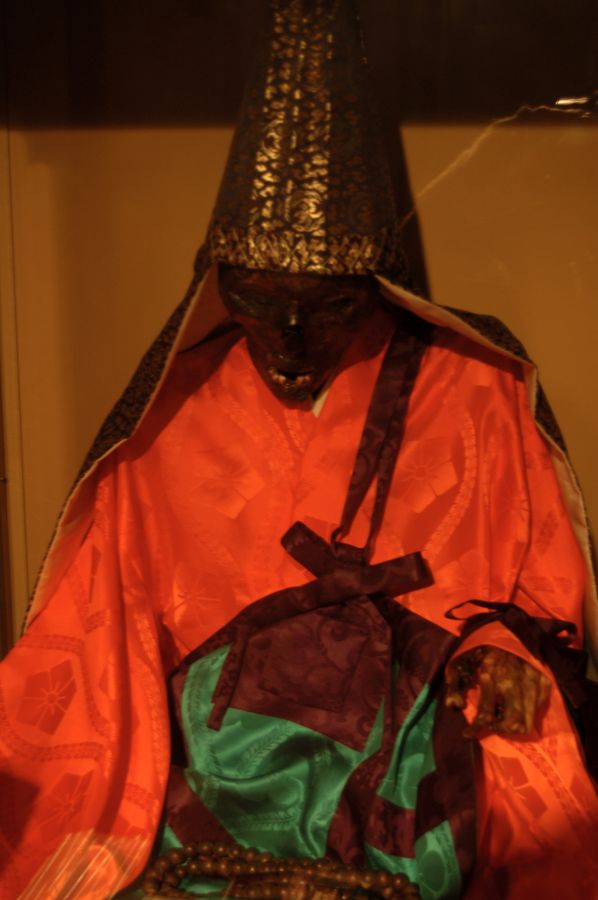
This makes fasting to death sound like a joke. Some Buddhist monks called Sokushinbutsu in Japan not only committed suicide; they also did it in a way that led to their mummification. The process was started with a diet of nuts and fruits combined with hardcore physical activities. Elimination of body fat was achieved with the first step. The second step involved bouts of vomiting, loss of body fluids and poisoning of the body to deter a maggot attack: accomplished by consuming barks, root and a poisonous tea for a thousand days.
In the last stage, the monk would enter a stone tomb, sit in a lotus position and wait for death. He would sound a bell daily to let his fellow monks know he was alive. And then when the “no-bell” day came, the monks would seal the tomb, wait for another 1000 days before opening it to verify the mummification.

2. Fasting To Death


Vimla Devi, an Indian woman fighting cancer, died in 2006. The cause of death was not cancer but a 13-day fast called santhara. This voluntary death by fasting is practiced by the Jains, a community that believes in non-violence towards all creatures.  Santhara is usually initiated after the person decides that life has served its purpose and is ready for spiritual purification. There is growing opposition to the ritual, which is often seen as a form of suicide or euthanasia. But within the community, preventing santhara can invite ostracism.

1. Exposure


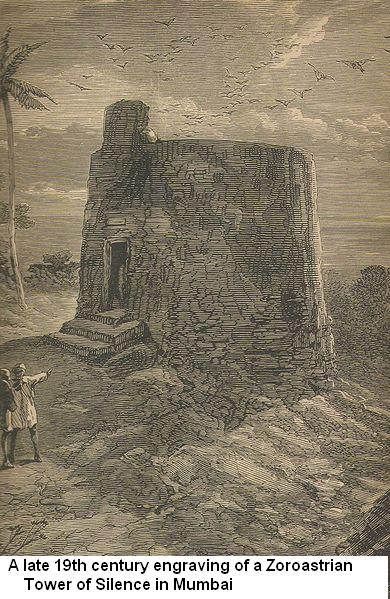
Zoroastrians believe that after death the body becomes a host for corruption and defilement. Cremation or burial are ruled out because they might end up polluting sacred elements like fire and earth. So, they go for a ritual called exposure of the dead. The deceased’s body is taken up to a raised structure called the Tower of Silence and left there to be devoured by vultures. The practice is now only followed in the Indian subcontinent. Dwindling vulture population in India has made the process more gruesome. Some recent photos, showing a growing heap of rotting cadavers atop the Tower in Mumbai (India), have stirred a controversy within the community

Top 10 Facts You Didn’t Know About Sperm

We all know what the little guys are for and who’s responsible for making them, but  the baby makers are packing a lot more than just the half the DNA package to make a new human being.  Here are some surprising facts which are going to make you look at the little fella’s in a completely different light.

10. Fertility at the Speed of Light

sperm 1
Human sperm travels at the staggering rate of up to 4 millimeters per minute, but many are as slow as 1 millimeter per minute.  You have to put this into perspective; human sperm are only 55 millionths of a millimeter or 55 microns in length, so a millimeter is a pretty big deal to the mini-me’s.
The average length of the journey to the fallopian tubes is 175 millimeters, which means the Road Runners of the team can get there in 45 minutes, but in practice the journey takes anything up to 3 days.

9.  A 25% Shot at the Title

odds
Even a fertile couple with no conception issues and practicing unprotected sex with ejaculation in the female have only a 1–in-4 chance of conceiving.  If you wear jockey shorts to keep the meat and two veg neatly packaged, instead of those airy boxer shorts, your chances start dwindling rapidly.
Human reproduction is notoriously fickle and very inefficient; in fact, it’s a wonder any of us got here to begin with.

8. Sperm are Like Men – No Sense of Direction

direction
One of the reasons for sperm taking so long to find the egg is because they have no sense of direction.  There are chemical signatures released by the egg to act as a “guide” to the sperm, but have you ever known of a man to take directions from a woman?
Only 1 in 5 sperm will start swimming in the right direction after ejaculation, which accounts for that age old bedroom debate about who will be sleeping in the sticky patch after making love.

7. Your Biological Clock is Ticking – Not Yours, Girls – The Guys!

biological-clock
The biological alarm clock may be ticking for women, but they have a much longer lie in life’s fertility bed than men do; for guys the biological alarm goes off much earlier. Women enter menopause sometime in middle age, but guys start a rapid decline in the quantity and quality of their sperm when they hit the ripe old age of 25!

6. New York vs. Los Angeles

new york men
Gangsta rappers may have their West coast/east coast rivalry, but there is one thing there is no dispute over.  For reasons no-one understands, New York men have a 50% increased sperm count than guys from Los Angeles.  Go Giants!

5. Never Get Stuck in Reverse

shark
Sperm can only swim in one direction – forwards.

4. Size Does Matter

y chrom
The sperm of a fruit fly can be as long as the body of the male fly, about 1.1 mm. On the other hand, of the vast number of mammals, humans included, have one of the smallest sperm cells, measuring only 40 microns long. Rats produce one of the largest sperm at 170 microns long.
If there was a prize for biggest sperm in nature, it would go to Drosophila bifurca, a tiny fruit fly whose coiled sperm would measure more than 2 inches long if straightened out. That’s 1,000 times longer than an average human sperm. (Source)
“To put that into perspective, if humans made sperm that long and you took a six-foot man and stood him on the goal line of a football field, his sperm would stretch out to the 40-yard line,” said Adam Bjork, a Ph.D. student at Syracuse University in New York.

3.  Time to Mature

sperm development
Sperm take 2 ½ months to grow to maturity in the testes.  The question then becomes where are all these little guys hanging out down there?  The sperm nursery and warehouse is the epididymis which found on top of the testes.

2. How Come There is Enough Room for All the Little Guys Down There?

rat testes
The majority of ejaculate is not sperm; sperm only accounts for around 5% of your population juice, with the rest being made up of fluids which contain a combination of nutrients and protective substrate to help the little guys on their way to the egg.

1. Eat Your Veggies

veggies
How healthy a man is has a direct bearing on his fertility.  Eating fresh fruit and vegetables, avoiding junk food and maintaining a healthy weight, lots of fresh air and exercise, taking vitamin supplements, getting plenty early nights and abstaining from tobacco and alcohol, are all guaranteed to give a man a higher sperm count.  Not only will he produce more sperm, but they will be much more energetic and thus more likely to be The One – the only issue with this is your offspring are likely to be very boring.
by Karl Hindle

Friday, April 8, 2011

Top 10 Shocking Medical Stories

10. Polish Railroad Worker Wakes Up From 19-Year Coma

Jan-Grzebski
During the 1980’s, Poland was still run by a Communist regime. It was a terrible period of despair, great poverty and confusion.
Polish railway worker Jan Grzebski, suffered a severe head injury while attaching two train carriages. He was rushed to the hospital, but the doctors had even more devastating news for the family: besides the injuries caused by the work-related accident, Jan Grzebski was suffering from brain cancer. He fell into a deep coma of 19 years. Doctors didn’t expect him to live longer than three years. His family had faith that Jan would recover and his wife Gertruda provided the loving care Jan needed to survive. The amazing part of this story is that Mr. Grzebski awoke on April, 12, 2007 after 19 years of coma. He awoke to a world of democracy and capitalism. Mr. Grzebski was surprised to find out that 18 years had passed since the fall of Communism and that 11 grandchildren couldn’t wait to hug him. “What amazes me today is all these people who walk around with their mobile phones and never stop moaning,” he said. “I’ve got nothing to complain about.” This memorable statement is the perfect reminder to all of us who sometimes are complaining too much. Sadly, we often don’t appreciate the simple things in life until they’re taken away from us.

9. Children with the Werewolf Syndrome

werewolfboy
Indian boy Prithviraj Patil and Thai girl Supatra Sasuphan have dreams and behave just like other children around the world: they love to be included in activities and games; they enjoy swimming or painting, and most of all, eating ice-cream. What makes them different is the fact that both children were born with congenital hypertrichosis, known also as the Werewolf Syndrome.
This terrible disease is very rare and unusual. There have been fewer than 50 cases documented since 1638. The children are suffering from uncontrollable hair growth. Thick animal-like fur covers their head and parts of the body. Unfortunately, science and medicine haven’t found an answer for their disease.
It’s so sad to read headlines such as “Half human, half wolf” or “Real Wolf Kids”. The cruelty doesn’t come from the syndrome, but from society…

8. Amazing Human Electrical Conductor


Some people attracted worldwide attention by claiming they can harness the power of electricity. Jose Rafael Marquez Ayala is one of them.  Puerto Rican Jose Ayala seems to be a human superconductor, because he can carry huge amounts of electrical current through his body. Jose withstood various strong electric shocks with absolutely no side effects. Moreover, he burns paper with his fingers.   Is his power real, or a hoax?  If it is real, it is certainly amazing!

7. Miraculous Recovery After a 47-Story Fall

47 Story Fall
According to the NY Daily News, the Moreno brothers, Alcides and Edgar, were working on a window-washing platform attached to a skyscraper on E. 66th St., New York, when the platform collapsed on December 7, 2007. The 16-foot-long aluminum swing to the roof failed. Alcides Moreno cheated death after falling from the 47th story of the building, but Edgar didn’t survive.
The doctors performed at least 16 surgeries, because Moreno broke his ribs, both legs and right arm, badly injuring the spine. The medical staff described the victim’s recovery as “miraculous” and “unprecedented.” Doctors predicted that Moreno’s recovery would be complete in one, two years.

6. Teen Survives 118 Days Without A Heart

D'zhana Simmons
D’zhana Simmons of South Carolina is literally a walking, talking, medical miracle. The brave teenager lived for about four months without a heart, as she awaited a new, functional heart to replace the damaged one. Simmons suffered from dilated cardiomyopathy (DCM), meaning her weak and enlarged heart wasn’t pumping blood efficiently. The surgeons from the Miami Holtz Children’s Hospital performed an initial transplant on July 2, 2008, but the heart malfunctioned and had to be quickly removed. Meanwhile, D’zhana was kept alive by a custom-built artificial blood-pumping device. “She essentially lived for 118 days without a heart, with her circulation supported only by two blood pumps,” said Dr. Ricci, Director of Pediatric Cardiac Surgery.

5. A Life Without Pain

Gabby Gingras
Gabby Gingras is an energetic 9-year-old girl who is determined to be just like every other child around her. What makes her different from most of us, is a rare and extremely unusual disease known as CIPA – congenital insensitivity to pain with anhidrosis. There are only 100 documented cases of CIPA around the globe.
Gabby was born without the ability to feel pain, cold and heat. It might seem like an amazing gift, but actually it’s a devastating condition. Pain sensitivity is crucial, because pain works similar to a warning and defense mechanism. Gabby’s parents noticed something wasn’t right when their daughter was five months old. She was biting her fingers until they bled. Later on, the girl lost an eye and severely injured the other one due to excessive rubbing and scratching. Various measures have been taken to prevent these types of accidents. The desperate parents are doing their best under the difficult and challenging circumstances. Brave Gabby was the subject of a documentary. “A Life Without Pain” by Melody Gilbert.  It tells the powerful story of Gabby Gingras.

4. Allergic to H20

Aquagenic Urticaria
Whether it’s taking a hot bath, brushing your teeth, cleaning the house, or simply quenching your thirst, water is an essential part of our daily routine. We just cannot live without water! That is why it is a wonder to us that people can be allergic to water. Believe it or not, some people suffer from extremely rare physical forms of urticaria known as Aquagenic Urticaria and Aquagenic Pruritus – both of which are ‘allergic’ reactions to water. They are so unusual, that only about 30 or 40 cases are documented worldwide.
Ashleigh Morris (21, Australia) and Michaela Dutton (23, England) developed a one in 230 million skin disorder – Aquagenic Urticaria. If their skin comes in to contact with water, itchy red welts, lumps and blisters appear all over the body. Showering is a really painful experience for both of them. Michaela cannot drink water, coffee or tea, she cannot even eat fruits because they trigger the burning rash on the skin and make her throat swell up, but her body seems to tolerate Diet Coke. Ashleigh tries to avoid water as much as possible – she stopped doing sports and any other physical effort that makes her sweat. Aquagenic Urticaria is so extremely rare, that even doctors don’t fully understand the complex mechanism behind the bizarre skin disorder.

3. The Family That Couldn’t Sleep

Cheryl Dinges
FFI is the acronym of a fatal genetic sleep disorder called Fatal Familial Insomnia. Jay Schadler and Laura Viddy best describe the rare disease: “Those affected by FFI are forever trying and failing to fall asleep. The disease steals one’s sleep, mind and ultimately one’s life, and, before dying, one hovers for months in a twilight world.”
29-year-old Cheryl Dinges (left) is one of the members of a family that couldn’t sleep. Her family carries the gene for Fatal Familial Insomnia, such a rare condition that it is believed to affect only 40 families worldwide. Fatal Familial Insomnia killed their mother, grandfather and their uncle. Cheryl Dinges declined to be tested, even if her sister (right) didn’t inherit the mutation. FFI begins with mild twitching, panic attacks and insomnia. In time, patients start to hallucinate and insomnia becomes so severe that they totally lack the ability to sleep. Ultimately, patients develop dementia and, eventually, die. The mutated protein is called PrPSc. If only one of the parents has the mutated gene, there are 50% chances of inheriting and developing FFI.

2. Butterfly Children

Sarah and Joshua Thurmond
The sad story of Sarah and Joshua Thurmond started when doctors diagnosed them with Epidermolysis bullosa (EB), another rare genetic disorder that cause the skin to be extremely fragile. Erosions and blisters occur because the skin layers lack a fibrous protein that is responsible for anchoring filaments to underlying tissues.
Joshua suffers from one of the most severe types of EB, Epidermolysis bullosa dystrophica.  Unfortunately, his sister too, but she passed away on Oct. 8, 2009. The disease took her at the age of 20. According to medical studies, people born with EB have a life expectancy of about 30, maximum 40 years.

“Cotton Wool Babies”, “Crystal Skin Children” or “Butterfly Children” are the terms often used to describe the fragile condition of younger patients. Their skin is as fragile as a butterfly’s wings. The slightest rub can cause painful wounds. Brave Sarah and Joshua learned to live with extreme and constant pain. Special bandages help lessen the pain and prevent infections, but currently, there is no cure for EB. Even if these children will never know what it’s like to run, swim or jump.

1. Giving Birth to a Mummy

Zahra Aboutalib
Zahra Aboutalib, from Morocco, delivered a child she’d been carrying for almost half a century. This shocking yet fascinating story began in 1955 when Zahra went into labor. She was rushed to a hospital, but after watching a woman dying on the operation table during a Caesarean section, Zahra fled back in her small village outside Casablanca. After the pains were gone and the baby stopped kicking, Zahra considered him a “sleeping baby”. “Sleeping babies” are, according to Moroccan folk belief, babies that can live inside a woman’s womb to protect her honor.
When Zahra was 75, the excruciating pains occurred again. Doctors performed an ultrasound test and discovered that her “sleeping child” was actually an ectopic pregnancy. What is even more amazing is how Zahra survived and how the dead fetus was accepted by the body just like another organ. Generally, this doesn’t happen. If not discovered in time, the growing fetus will eventually strain and burst the organ that contains it. Under these circumstances, the mother has few surviving chances. After nearly five hours, the surgeons successfully removed Zahra’s calcified fetus.
Stone babies, lithopedions, are an extremely rare medical phenomenon. According to the Journal of the Royal Society of Medicine, only 290 cases of stone babies have been documented

Popular Posts

LinkWithin

Related Posts Plugin for WordPress, Blogger...

Popular Posts